Instant payments have become the standard
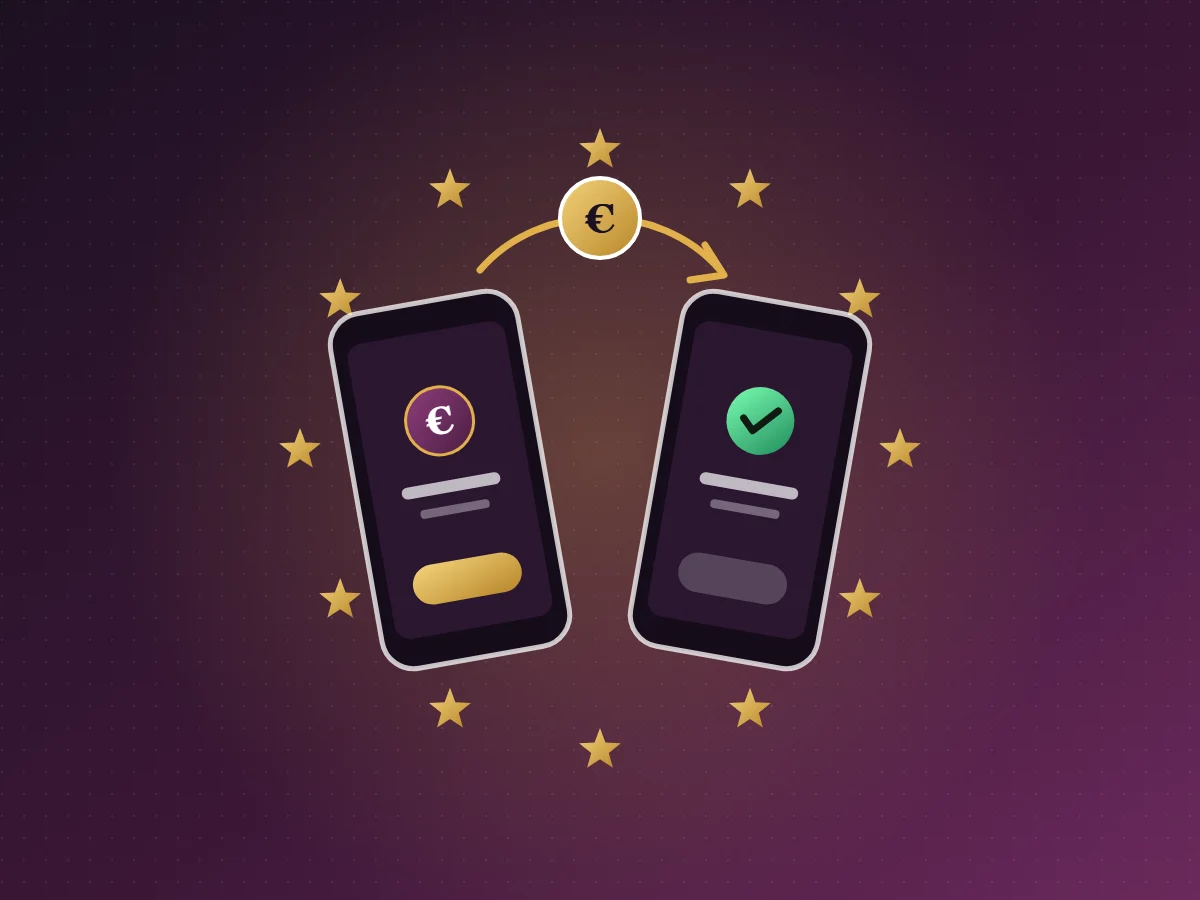
Regulation (EU) 2024/886, known as the Instant Payments Regulation (IPR), entered into force in April 2024. It made instant euro credit transfers an ordinary service rather than a premium option that a bank could choose whether or not to offer.
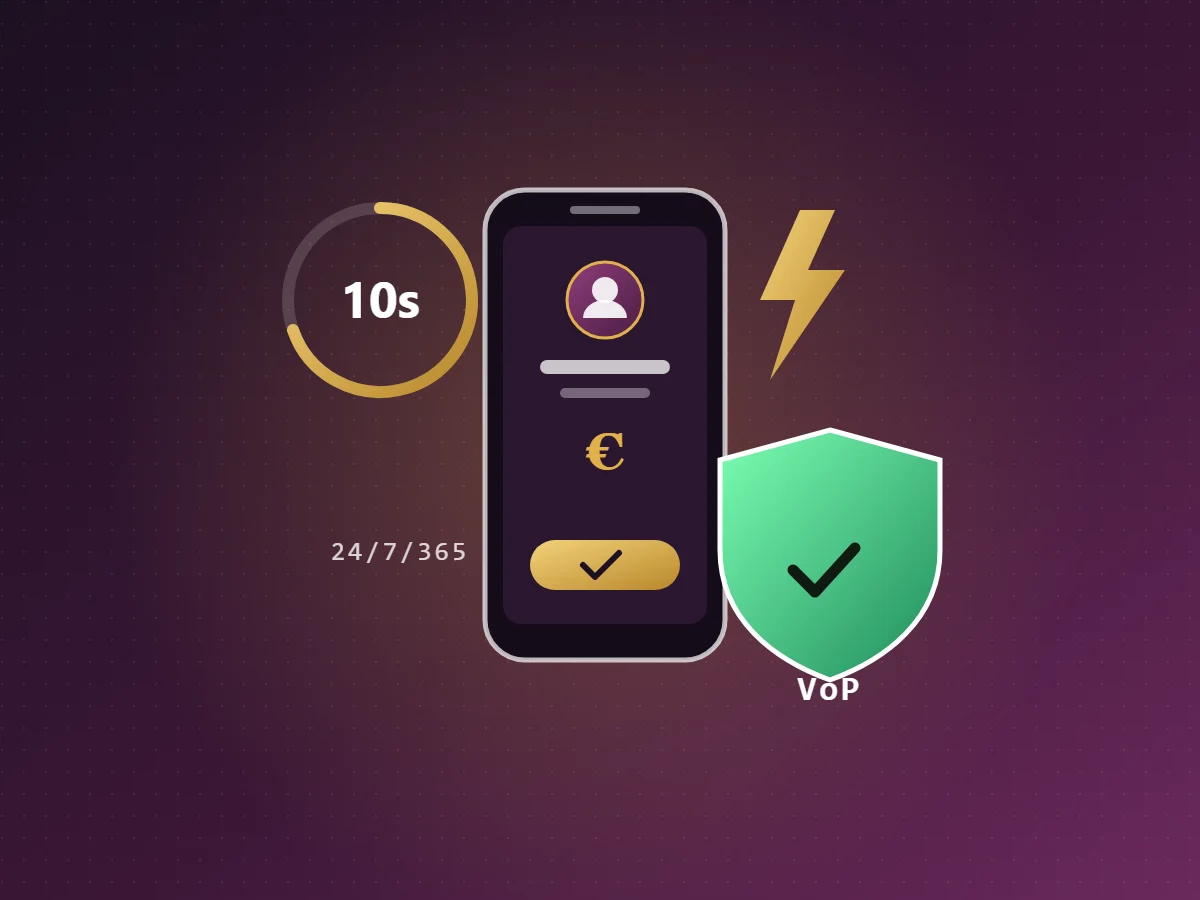
- 10 seconds. Funds must reach the payee's account no later than 10 seconds after the payment is sent.
- 24/7/365. The service runs around the clock, on weekends and holidays, with no "banking hours".
- Price parity. An instant transfer may not cost more than a regular one.
- Sanctions screening. Instead of checking every payment, banks screen their customer base against EU sanctions lists daily. This removes unnecessary delays.
The requirements were phased in. Euro-area banks had to be able to receive instant payments by 9 January 2025, and to send them and verify the payee by 9 October 2025. For EU countries outside the euro area, the deadlines are pushed back to 2027. Payment institutions and e-money institutions gained access to payment systems and have their own transition schedule.
What is Verification of Payee (VoP)
Verification of Payee (VoP) is a check that the payee's name matches their IBAN account number. It takes place before the customer confirms the payment. The payer's bank sends a request to the payee's bank, which replies within a second whether the details match.
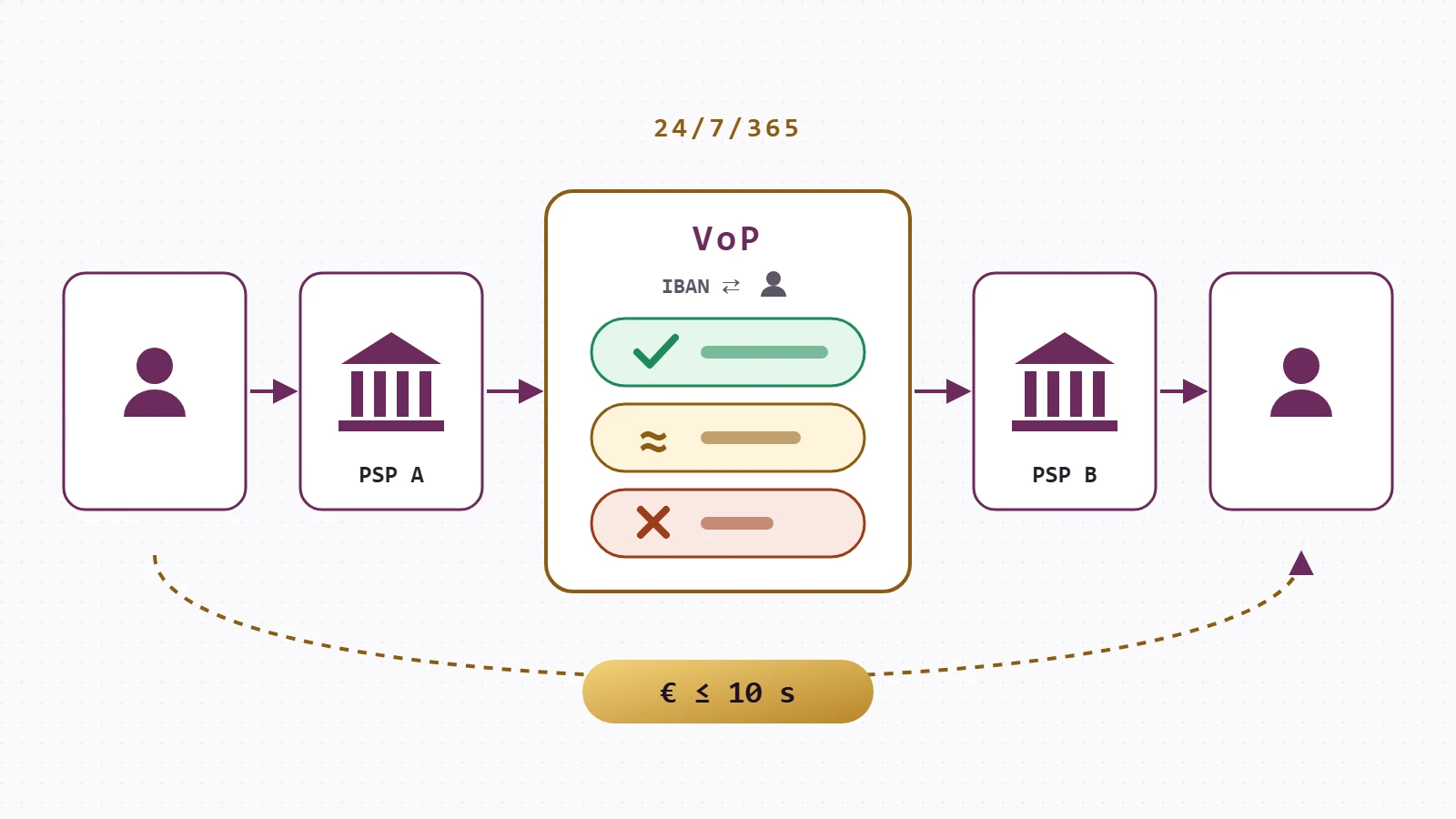
The customer sees one of these results:
- Match. The name and IBAN correspond, and the payment can be confirmed.
- Close match. For example, one letter is wrong. The bank shows the correct name of the account holder.
- No match. The bank warns that the money may go to the wrong person.
- Check not possible. For example, because of a technical problem at the payee's bank.
Importantly, VoP applies not only to instant transfers but also to regular euro credit transfers. The technical rules for exchanging requests between banks are set by the European Payments Council (EPC) VoP scheme.
How VoP fights fraud
The most common transfer fraud scheme is swapping payment details. A fraudster hacks a supplier's email or impersonates them and sends an "updated" invoice with their own IBAN. Previously, the bank executed the payment by checking only the account number. Now a name mismatch becomes visible before the payment is made.
The regulation also allocates liability. If a bank failed to provide the VoP service and the customer lost money as a result, the bank must refund it. If the customer saw a "no match" warning but confirmed the payment anyway, liability shifts to them. So the warning is not a formality but a real protection mechanism.
There are limits too. VoP will not help if a fraudster opened an account in their own name and persuaded the victim to transfer money to a "safe account". That is why the EU did not stop at the IPR and is supplementing it with new rules.
PSD3 and the PSR: the next layer of protection
In 2023, the European Commission proposed a package of two acts: the third Payment Services Directive (PSD3) and the Payment Services Regulation (PSR). At the end of 2025, the Council of the EU and the European Parliament reached a provisional political agreement on the package. After formal adoption, most of the rules will apply following a transitional period.
- Bank impersonation fraud. If a fraudster posed as a bank employee and the customer reported it to the police, the bank must refund the lost funds.
- Platform liability. Online platforms that fail to remove fraudulent content after being notified may be liable to banks for the losses.
- Data sharing. Payment service providers will be able to share information on fraudulent accounts to block them faster.
- Customer control. Spending limits, transparent ATM fees and a permissions dashboard for open banking.
PSD3 also merges the regimes for payment institutions and e-money institutions, while the PSR sets single rules that apply directly in all EU countries. For fintech companies, this means fewer national differences and more predictable requirements.
What it means for businesses and customers
For customers, the changes mostly show up as a new screen with the check result before confirming a payment. Businesses have more work to do:
- Accurate data. The company name in contracts and invoices must match the account holder name at the bank, or clients will see warnings.
- Bulk payments. For batch payouts, banks offer bulk payee verification.
- 24/7 liquidity. Treasury teams need to account for money coming in and going out around the clock.
- Cyber resilience. Uninterrupted payments require resilient IT infrastructure. These requirements are covered in our article on the DORA regulation.
Instant payments have also become the foundation for new European products. In particular, the Wero wallet is built on them — we cover it in our article on the European Payments Initiative.
In brief: frequently asked questions
Can I still send a payment if VoP shows "no match"?
Yes, the decision stays with the customer. But if they confirm the payment despite the warning, liability for a possible error or fraud shifts to them.
Does VoP only apply to instant payments?
No. EU banks must perform payee verification for both instant and regular euro credit transfers.
Can banks charge more for an instant transfer?
No. The fee for an instant euro transfer may not exceed the fee for a regular transfer.