What is EPI
The European Payments Initiative (EPI) is a company founded in 2020 by major European banks and payment providers. Its goal is to create a pan-European payment solution owned by European players and operating under European rules.
The first plan involved its own card, but it was dropped: competing head-on with established card networks proved too costly. Instead, EPI bet on instant account-to-account transfers, which were becoming the standard in the EU anyway. In 2024, the company acquired the Dutch online payment system iDEAL and the Belgian-Luxembourgish Payconiq, gaining a ready-made base of users and merchants.
How Wero works
Wero is EPI's digital wallet, launched in July 2024. It does not hold money itself; it works as a convenient interface to a bank account.
- Transfers by phone number. No need to know the IBAN: the recipient's phone number or email address is enough.
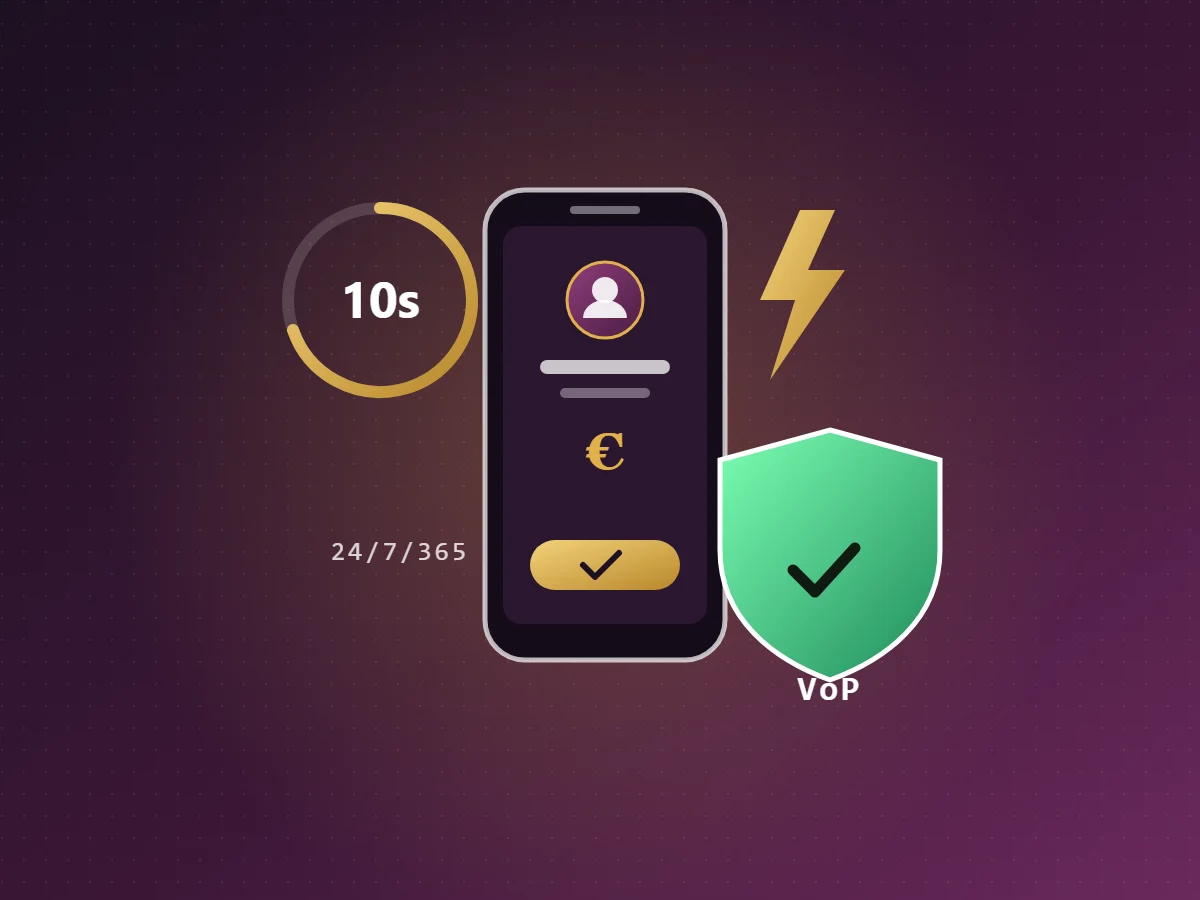
- Money in seconds. It runs on SEPA Instant transfers, so funds arrive immediately, even at weekends.
- No intermediaries. Payments go from account to account without a card, so the chain of participants and fees is shorter.
- Inside the banking app. Wero is built into participating banks' mobile apps, and there is a standalone app for other customers.
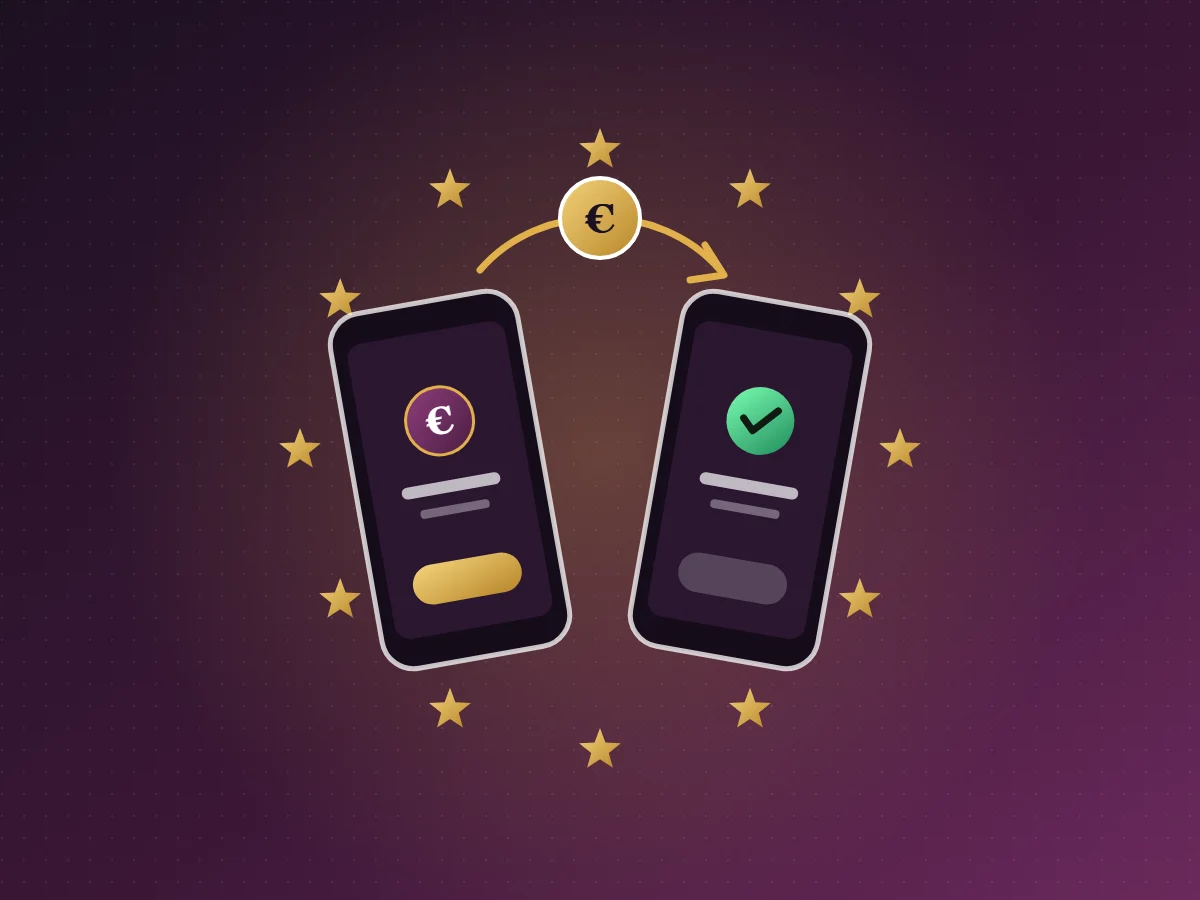
The key difference from national solutions is that it works across borders. A user in Germany can instantly send money to a friend in France or Belgium in the same interface as for domestic payments. The technical foundation for this is the Instant Payments Regulation, which requires banks to support 10-second transfers.
Roadmap: from transfers to shops
EPI is developing Wero step by step, from simple to complex:
- Person-to-person transfers. Launched in 2024 in Germany, France and Belgium.
- Online shopping. Payments in online shops started in 2025, and in the Netherlands iDEAL users are gradually being moved to Wero.
- In-store payments. The next stage is payments at the point of sale, along with subscriptions, instalment payments and loyalty programmes.
The number of users already runs into the tens of millions, mainly because the wallet is built into the apps of large banks. The main test is offline retail: that is where cards are strongest, and merchants need a reason to adopt a new payment method.
Europe's network: EPI and EuroPA
EPI is not the only European project of this kind. Bizum is popular in Spain, Bancomat Pay in Italy, MB WAY in Portugal and Vipps MobilePay in the Nordic countries. These systems have joined forces in the EuroPA alliance. EPI and EuroPA have announced their intention to connect their networks so users can send money between different wallets.
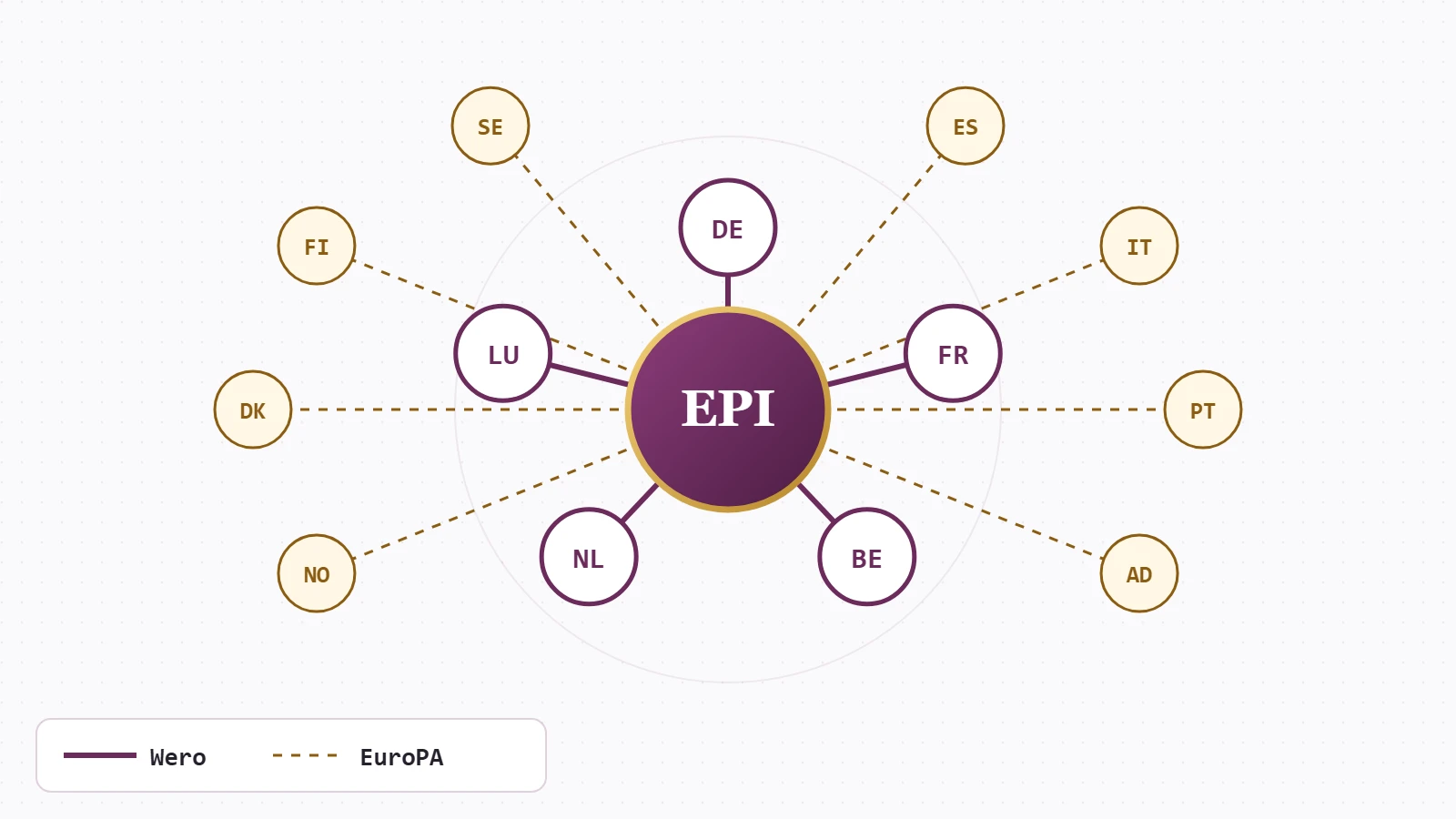
If the integration works, Europe will have a network covering most of the EU population that does not depend on non-European companies.
Why it is a question of sovereignty
The European Central Bank has repeatedly stressed that a large share of card payments in the euro area runs through non-European card schemes, and that in many countries there is effectively no alternative to them for in-store payments. This is not only about fees but also about resilience: critical infrastructure depends on decisions made outside the EU.
- For banks. Control over the customer experience and data, and lower payment processing costs.
- For merchants. Potentially lower fees than card payments and instant receipt of funds.
- For users. Simple cross-border transfers without an IBAN and without extra fees.
In parallel, the ECB is preparing the digital euro. EPI and regulators see these projects as complementary: a private wallet and public digital money can work together. For the crypto industry, a parallel route to payments is opened by the MiCA regulation and euro stablecoins.
What it means for Ukraine
Ukrainian banks are not yet connected to Wero, but the direction of travel is clear. Ukraine is gradually integrating into the European payments area and preparing to join SEPA. For Ukrainians in the EU, Wero is already available through accounts at European banks. For Ukrainian fintech companies, it is a benchmark: the future of retail payments in Europe is being built around instant account-to-account transfers.
In brief: frequently asked questions
Do I need a separate card or account for Wero?
No. Wero works directly with your current bank account: in a participating bank's app or in the standalone Wero app.
How much does a Wero transfer cost?
Transfers between individuals are usually free. Terms for businesses are set by the merchant's bank.
Can Ukrainians use Wero?
Yes, if they have an account with an EU bank that supports Wero. Ukrainian banks are not yet part of the system.